Foundation installation in Santa Paula CA - built for the ground under your house
Building on a sloped or vacant lot and not sure what it needs? We match the foundation to your ground before anything gets poured.
What goes into putting in a new foundation?
Foundation installation in Santa Paula means putting in the foundation type your house needs, usually a slab or a crawl space, and the right one depends on the ground it sits on.
Most foundation calls I get come from people planning a new house, an addition or a building on a bare lot, and the first question I ask isn't about concrete. It's what kind of ground you've got, because a foundation that doesn't suit the lot is where the trouble starts. If you already know you want a slab, our page on slab foundation building covers that one in more detail.
Your soil, the foundation type your lot calls for and where you're building are what set the price. The schedule turns on whether your lot sits in a state hazard zone, whether a soil study has to come first and whether a permit applies. The estimate I write up after seeing the lot spells out what's included, so you're not guessing at your own figure.
- We put in slab and crawl space foundations, matched to how your lot is shaped.
- Prep means digging out and packing the ground, not just raking the dirt level.
- We check where the water runs so the ground drains away from the foundation.
What happens after you call about a foundation?
I come out for every estimate myself, and we're fully licensed and insured. Here's how a foundation job runs, from your first call to the walk-through once the concrete is in.
Call or send the form
Tell us where the lot is and what you're planning to build, and we'll set a time for me to come out. If you've already looked up your hazard zone, have that result handy.
I walk the site with you
I look at how the ground is shaped and ask a lot of questions about what's under and around the job, like low spots and where water runs. You get a written estimate that spells out what's included, so you can see what you'd be paying for before you decide.
Our crew preps and pours
Once you say go, our crew handles the prep, forms and pour, and I check in on the work as it goes. When we're the ones filing the permit, we handle the paperwork with the city or county office too.
We walk the finished foundation
When the forms come off, I walk the finished job with you so you can see what you're building on. That's the time to ask anything before the framing goes up.
Forms, rebar and fresh pours from foundation work
These photos show the kind of work that goes into a foundation, from the dug-out ground and forms to the steel and the pour. They're general trade photos, so look at the steps rather than any one house.
A swimming pool is surrounded by a broad gray paver deck, with metal ladders, lounge chairs, and dark pergolas.
Gray square patio pavers surround wooden lounge furniture in a leafy courtyard.
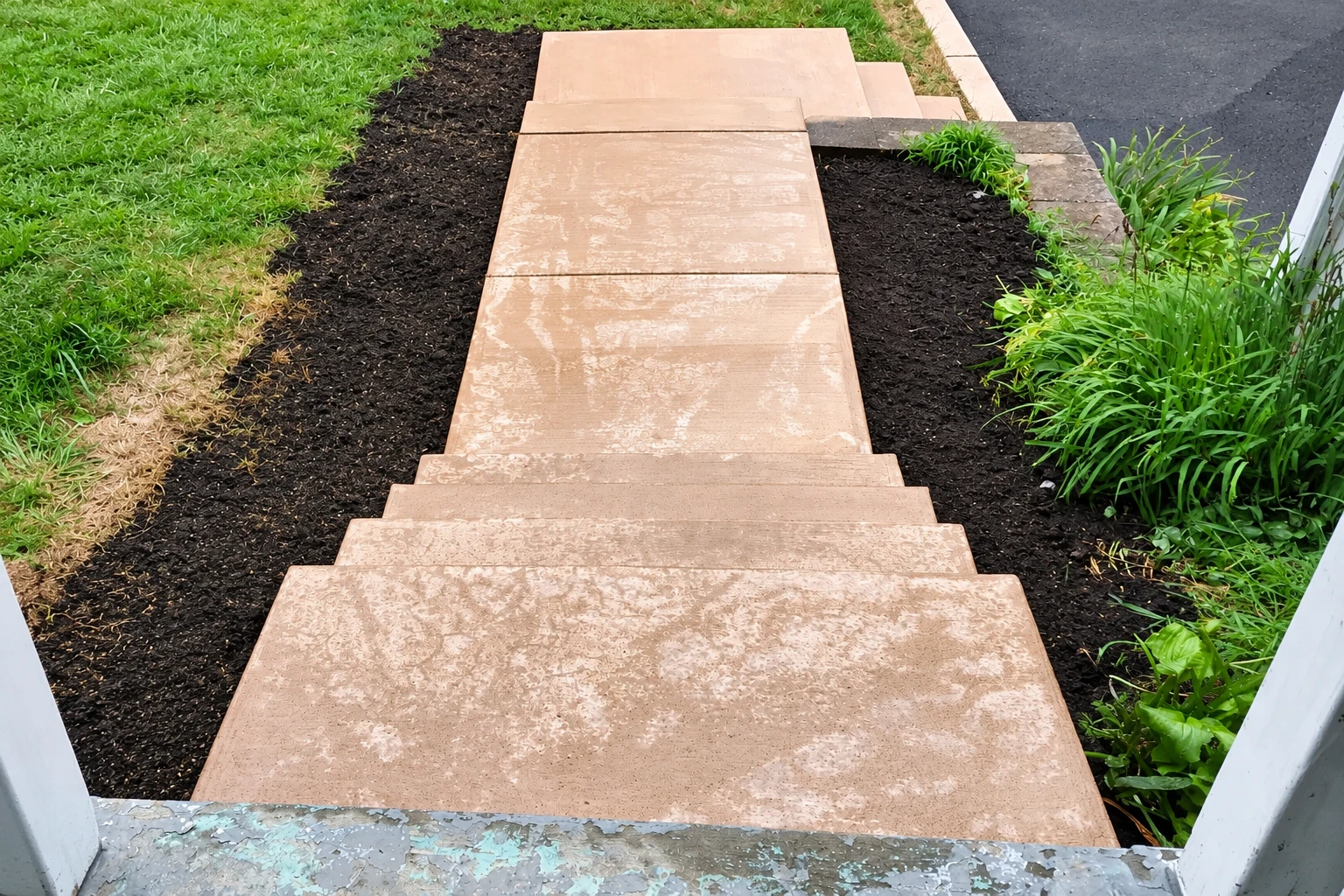
Decorative stamped concrete walkway beneath a covered porch with stone columns and garden beds.
Stamped concrete patio beneath a wooden pergola, with a tan flagstone pattern beside a brick house.
Curved concrete pool deck surrounds a swimming pool beneath a raised white house and deck.
Decorative stamped concrete driveway with irregular stone patterns in front of a three-car garage.
Get a foundation estimate for your Santa Paula lot
Call (805) 873-8640 or send the form with your address, whether the lot is uneven and what the state hazard zone lookup showed. We'll reply within one business day to set a time for my free on-site visit, with no obligation.
(805) 873-8640Questions about foundations, soil and hazard zones
These are the questions I hear most from people planning a new foundation around Santa Paula. Most of them come back to the ground, the state hazard maps and what goes into the price.
How do I find out if my lot is in a Seismic Hazard Zone?
Look your address up in the state's EQ Zapp map, which shows whether a property sits in an earthquake fault zone, a Seismic Hazard Zone or both. It's a lot-by-lot answer, so a neighbor's result doesn't settle yours, and if you're still unsure, the appropriate local agency can tell you. Bring what you find to the estimate.
Do I need a soil study before building on a vacant lot in Santa Paula?
You might, because on an undeveloped lot inside a state-mapped Seismic Hazard Zone, a site-specific study by a licensed engineering geologist or civil engineer may be required before most structures can be permitted. A single-family frame house of up to two stories that isn't part of a development of four or more units is exempt from the state's zone requirements, though local agencies can be stricter than the state. If your lot is in a zone, plan time for that study ahead of the permit.
What causes a foundation to move on clay soil?
Clay swells when it soaks up water and shrinks as it dries, and that movement can push up and drop whatever sits on it. Ventura County's soil data show the highest-clay soils are the most expansive and generally sit in low-lying areas, though that data covers only the south half of the county. That's why a low spot on your lot is one of the first things I ask about.
What is liquefaction and can it affect a house foundation?
Liquefaction is when loose, water-soaked ground loses its strength and fails during strong shaking. It's one of the weak-ground problems the state's hazard zones flag, which is why we settle the zone question before choosing a foundation type.
Will a new concrete foundation crack?
Concrete usually gets some fine cracks as it shrinks while curing, the slow hardening after the pour, so I won't tell you it never will. What we can do is put in control joints, planned lines that give the concrete a place to crack where we chose, and keep the fresh concrete from drying out too fast so it cures strong.
How much does a new foundation cost in Santa Paula?
I can't give you a fair number before seeing the lot, because the total comes down to the soil, the foundation type and the area I mentioned up top. A foundation project can also bring costs past the concrete itself, like an architect, a landscaper and delivery and installation of materials, so ask me at the estimate which of those you'll need. Satisfaction guaranteed on every job.
Foundation installation in Santa Paula and nearby cities
Santa Paula's Building & Safety Division at 805-933-4218 takes building applications, and at the estimate we work out whether your foundation needs a permit and who files it. We also pour in Fillmore, Ventura and the cities around them.