Concrete Parking Lot Building in Santa Paula CA - pavement built for the traffic it gets
If your lot is cracking, holding water or crumbling where trucks turn, we rebuild it with a packed base and pavement sized for the load.
What goes into building a concrete parking lot in Santa Paula?
Concrete parking lot building in Santa Paula, CA starts with figuring out what will drive on the lot. Then we dig out and pack the ground and form, pour and finish pavement sized for those cars and trucks, so it drains and holds up where the heavy loads land.
Lot calls usually come from a business or property owner who's tired of patching potholes and puddles, or who's building new and wants it done once. The price moves with the size of the lot, how much of it has to carry trucks, how much digging and base work the ground needs and whether old paving has to come out first. The schedule turns on approvals, the weather and curing, the days new concrete needs to gain strength before traffic goes back on it. My written estimate spells out what's included, so you can see where your number comes from.
In California, pouring and finishing pavement falls under the state's concrete contractor license, so ask any bidder about theirs. We're fully licensed and insured.
- We dig out and pack the subgrade, the ground under the slab, instead of just raking it level.
- Thicker concrete, often with rebar, steel bars that hold it together, where trucks turn and unload.
- Control joints, grooves that steer cracks into straight lines, cut before the slab cracks on its own.
What happens after you call about a parking lot?
Here's how a lot job runs from your first call to the walk-through at the end. I'm the one you'll meet at the start and the finish, and our crew does the work in between while I check in.
Call or send the form
Call (805) 873-8640 or send the form with the lot's rough size and what will park there. We get back to you to set a time for me to come out.
I walk the site with you
I come out myself, look at the ground, the old paving and the way in for trucks, and ask a lot of questions about what's under and around the lot. You get a written estimate that spells out what's included, so you can see where the money goes before you decide.
Our crew preps, forms and pours
Once you say go, our crew digs out the base, sets the forms and pours, and I check in as the work goes. The schedule moves with the weather and with any permit the job needs, and I'll keep you posted on where things stand.
We walk the finished lot
When the work's done, I walk the lot with you and point out the joints and the finish so you know what you're looking at. After that it's the wait before traffic goes back on, which we'll have planned together.
Forming, pouring and finishing concrete flatwork
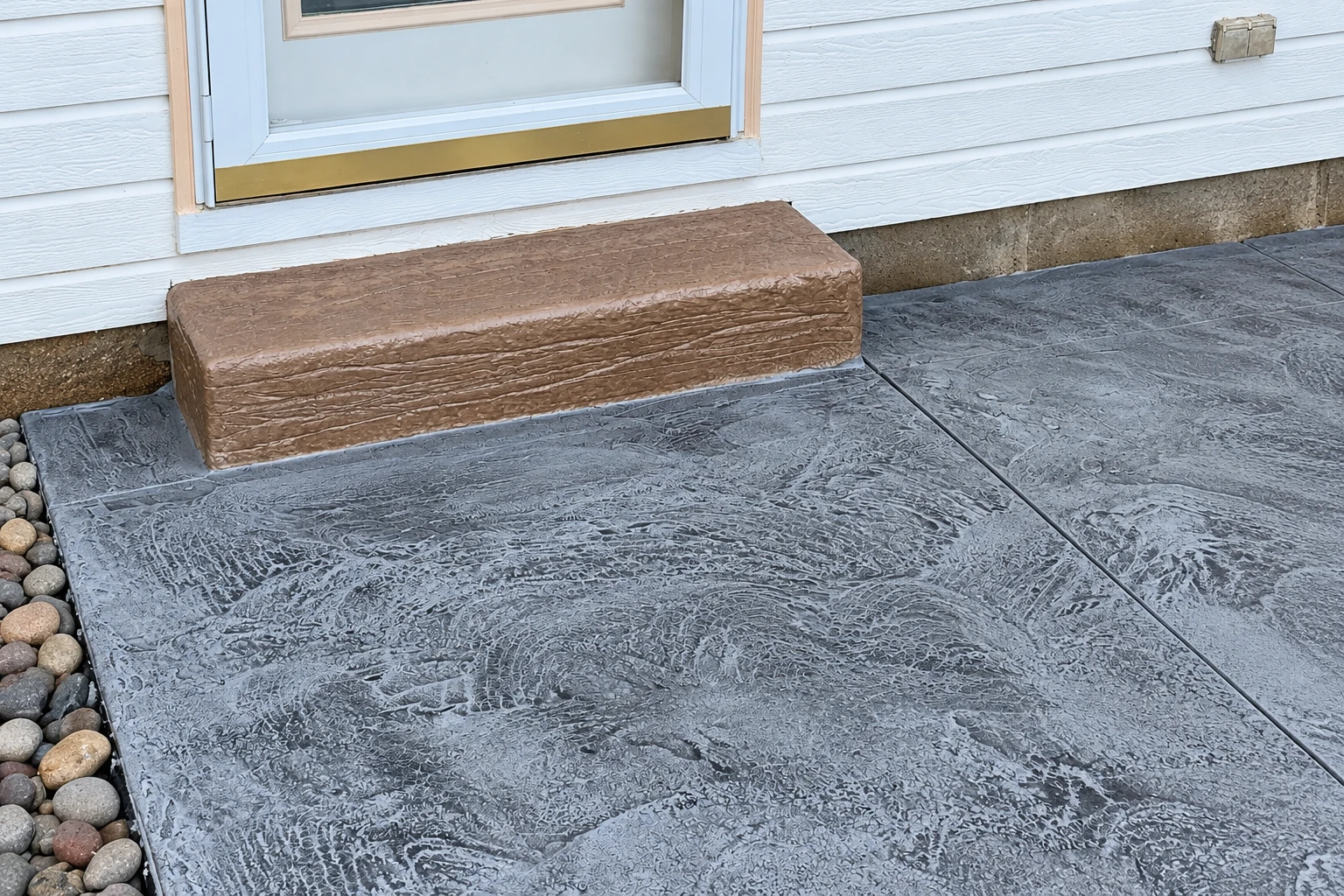
These photos show concrete flatwork, the flat slabs like lots, drives and walks, at different stages. They show the trade's work in general, not our own jobs, so look at them for how a pour comes together.
Three broad concrete-topped brick steps lead to a red front door.
Curved concrete sidewalk runs beside a stone-faced house, with a bench, pebble bed, and potted plant.
Concrete driveway in front of a stone garage with three dark doors and two dormer windows.
Smooth concrete driveway with straight control joints leads to a black garage door.
A gray stamped concrete patio with irregular stone-like texture sits beside a stone wall and leafy potted plants.
Concrete sidewalk and broad steps winding through a landscaped garden toward a house.
Get a free on-site estimate for your parking lot
Send the form or call (805) 873-8640 with the lot's rough size, number of spaces and vehicles you expect, and we'll reply within one business day to set my visit. The estimate is free, on site and carries no obligation.
(805) 873-8640Questions about building a concrete parking lot in Santa Paula
These are the questions property owners ask me most before a lot goes in. Where Santa Paula or California has a rule that applies, I've said what it is and what it means for your lot.
How much does a concrete parking lot cost in Santa Paula?
It comes down to the lot's size, how much of it has to carry trucks and how much ground work happens before the pour. Removing old paving, digging out soft or clay ground and laying out accessible spaces all add to it, and where only cars and pickups park, one concrete industry brochure says concrete without steel reinforcement is usually satisfactory. Your estimate puts all of that in writing for your lot.
How long does new concrete need before cars and trucks can drive on it?
One concrete trade group advises keeping cars off a new lot for 3 days and trucks for 7, unless tests show the concrete has already gained enough strength. That's the time curing needs, and it's why we work out parking and deliveries with you before the pour.
How many accessible parking spaces does a business lot need in California?
State rules set a minimum of 1 accessible space for a lot with 1 to 25 spaces, rising to 4 for 76 to 100, counted for each parking facility on the site. Those rules cover lots at businesses, places open to the public, government buildings and public housing. For compliance questions about your plans, the building official who reviews them is the one to ask.
What approvals do I need before grading a parking lot in Santa Paula?
Santa Paula wants the right development permit, a final recorded tract map, or both in place before any grading starts. You can reach the city's Building & Safety Division at 805-933-4218, and I'll go over where your project stands at the estimate.
What causes a concrete parking lot to break down over time?
On lots that mostly see cars, leaked fuel and oil, rain, poor drainage and weather usually cause more trouble than the loads themselves. Where the base wasn't dug out and packed, the ground settles and the slab cracks over it, which is why we spend our effort underneath.
Does clay soil affect a concrete parking lot in Ventura County?
It can, because the soils with the most clay swell and shrink the most, and county soil data shows they're generally in low-lying areas. That data covers the south half of the county, and I look at what your lot sits on before I price the base.