
Santa Paula ConcreteSanta Paula Concrete(805) 873-8640

Concrete contractor in Carpinteria, CA - slabs that drain away from the house

Santa Paula Concrete is a concrete contractor pouring driveways, patios, walks, steps and retaining walls for homes and small businesses in Carpinteria, with most of our care going into the base and drainage you won't see later.

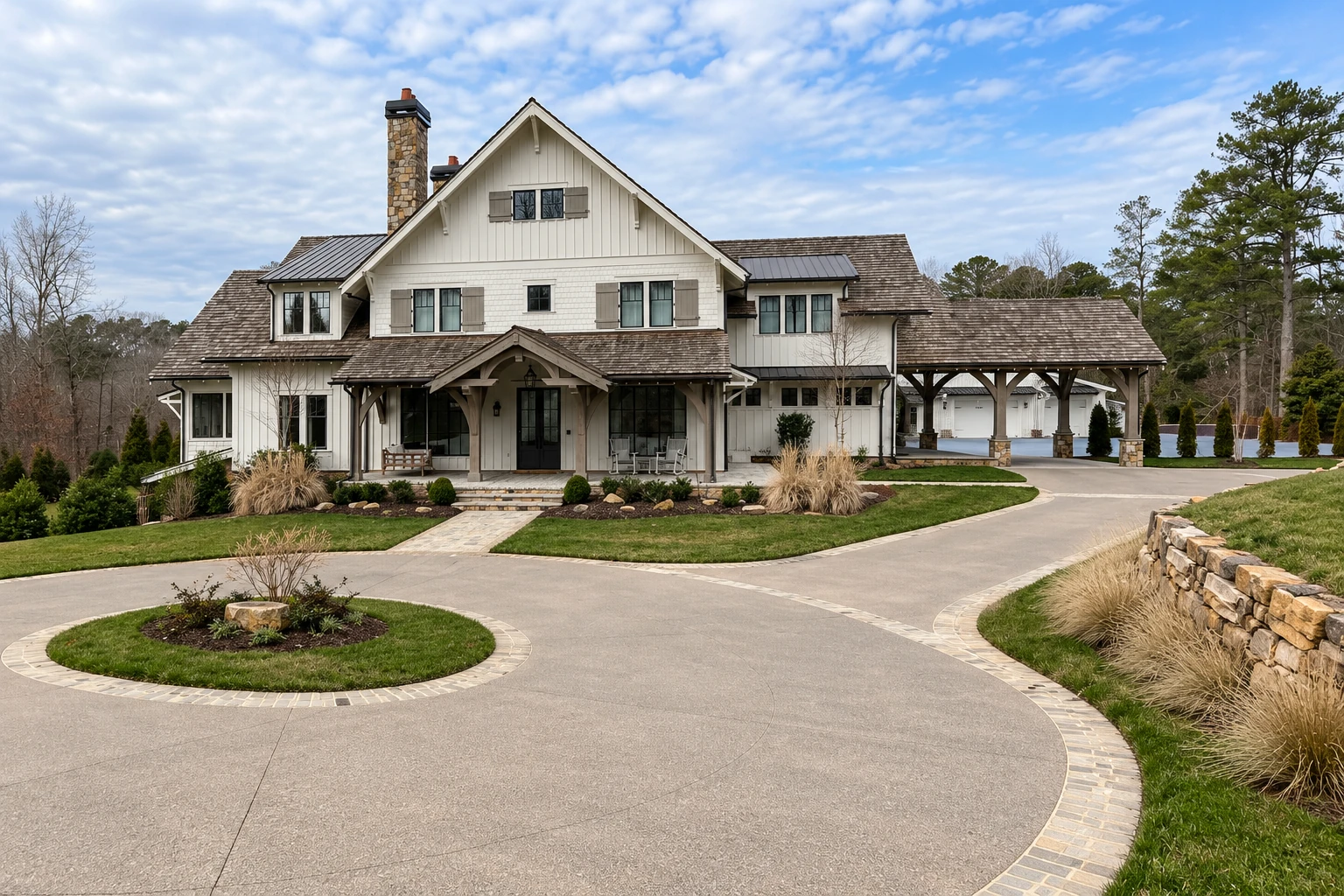
A curved concrete driveway leads to a large white house, edged with light brick pavers and landscaped grass.

How Carpinteria's houses and lots shape a concrete job

Carpinteria is one of the coastal cities we work in, up the coast from where we're based in Santa Paula and past Ventura. What people call a concrete contractor about along this stretch is usually the same: a driveway that's cracked or sunk, a patio that holds water, or a walk or front steps pulling away from the house.

A lot of the older houses here, the ones built before 1980, sit on a raised foundation with a crawlspace under the floor, and they often have one or two steps up to the front porch. That changes the job. A new walk or driveway has to meet a porch step instead of a slab at ground level, the steps need their own footing, and the ground along the house has to shed water away from the foundation instead of toward it. We work out those heights and slopes before we set a single form.

The concrete work we do for Carpinteria homes and businesses

We do the full run of concrete work in Carpinteria, from driveways, patios and walks to retaining walls, footings, foundations and cutting through an old slab. Most of our calls come from homeowners, with some from small businesses and builders. Whatever the size, we plan each job from the ground up, looking first at what the concrete sits on, where water runs and what the slab has to carry, then picking the thickness, steel and finish to match.

  • Concrete driveway building

    Driveways take the weight of every car, so a thin slab or soft spot underneath shows up as cracks and sinking. We pour it thick enough for your cars, on a dug-out, packed base.

    Explore service
  • Concrete patio construction

    Back patios usually sit against the house, and one that falls toward the wall sends rain right to it. We check the fall before forming so water heads for the yard.

    Explore service
  • Stamped concrete services

    Stamped concrete suits a patio or entry where you want a stone or tile look without loose pieces. We press the pattern in while the top is still soft, then seal it.

    Explore service
  • Concrete sidewalk building

    Old walks tip or lift where roots or settling dirt moved them. We pour the new run on a packed base and cut control joints, grooves that steer cracks to a planned line.

    Explore service
  • Garage floor concrete

    A garage floor takes car weight and oil, and an old one often dusts or cracks. We pour it on a packed base with rebar, steel that keeps any crack from opening up.

    Explore service
  • Decorative concrete

    Decorative concrete adds color, exposed stone or a border to an entry or front walk people see first. We pick finishes that still give your feet grip when they're wet.

    Explore service
  • Concrete retaining walls

    On a sloped lot, a wall holds the dirt back so the yard or driveway above stays put. We plan the footing and drainage behind it, since trapped water is why most walls lean.

    Explore service
  • Concrete floor installation

    Shops, sheds and room additions need a flat floor that stays dry from below. We prep the subgrade, the ground the slab sits on, and set the floor at the height you need.

    Explore service
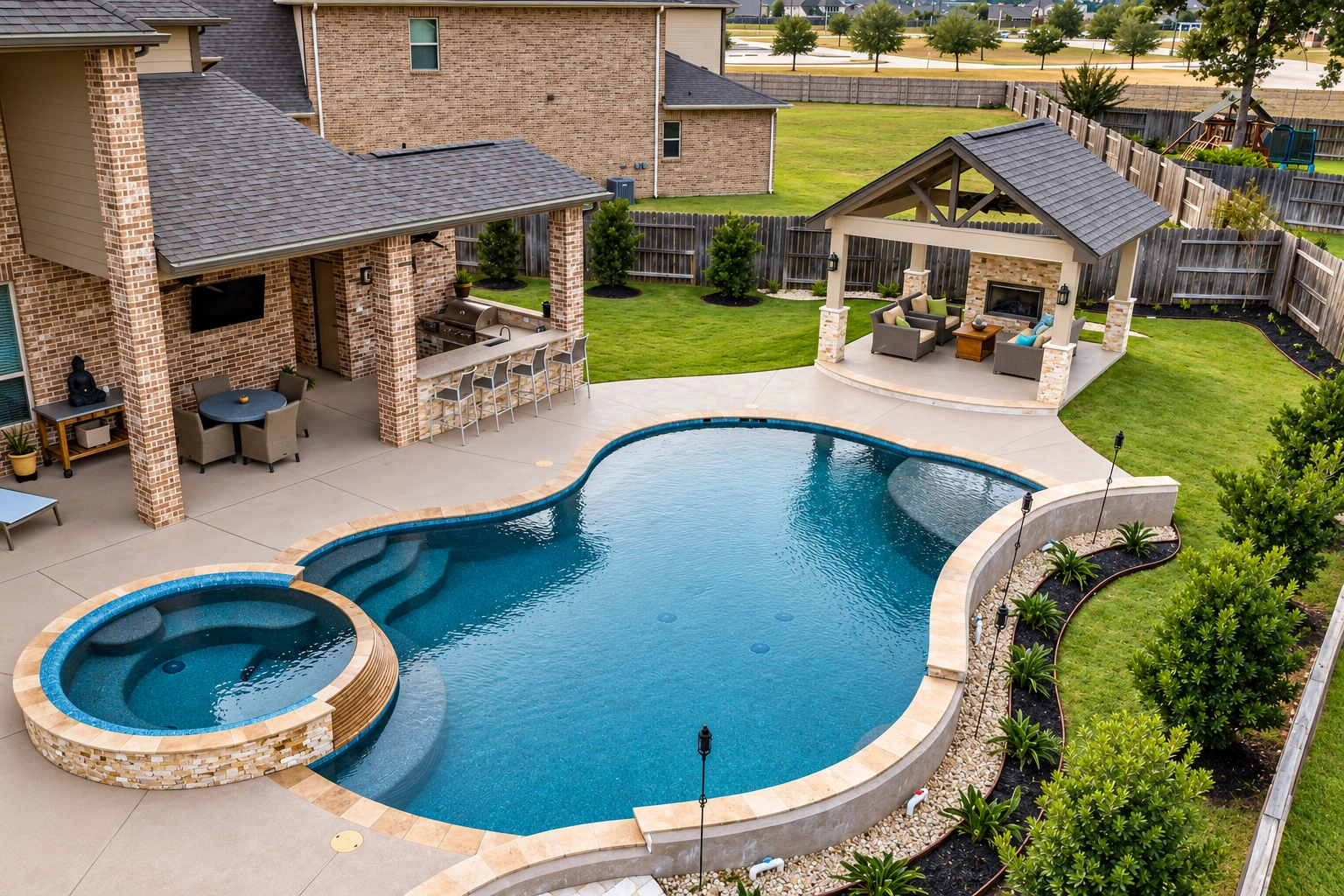
  • Concrete pool decks

    A pool deck gets wet feet all day, so it needs grip and a fall toward the drains. We pour a textured finish and cut joints so cracks land in planned lines.

    Explore service
  • Concrete steps construction

    Front steps up to a porch tend to crack and pull away as the dirt under them settles. We pour new steps on a footing with even risers, so each step feels the same.

    Explore service
  • Slab foundation building

    A new garage or addition on a slab needs ground that holds steady under the walls. We dig out, pack the base and set the steel first, since a foundation is hard to redo.

    Explore service
  • Foundation installation

    Additions and rebuilds need a foundation sized for the house, whether raised on a perimeter wall or set on a slab. We form and pour it to the plans, with drainage planned around it.

    Explore service
  • Concrete parking lot building

    Small business lots take traffic and turning tires, and thin or poorly drained concrete breaks up fast. We build a heavier base and slab where trucks turn and slope the lot to its drains.

    Explore service
  • Concrete footings

    Decks, walls, posts and additions all rest on footings, the buried concrete that spreads their weight into the ground. We dig them to the size the job calls for, down to firm ground.

    Explore service
  • Foundation raising

    When part of a house or slab has sunk, doors stick and floors slope. We find out why it dropped first, usually water or soft ground, then lift and support it.

    Explore service
  • Concrete cutting

    Running a new drain line, widening a driveway or removing a broken section often means cutting through an old slab. We saw straight lines so new concrete meets old at a neat edge.

    Explore service

Working in Carpinteria: permits, licenses and what moves the price

Carpinteria runs its own permits and business licenses, so a few things are worth settling before anyone digs. Here's how that works for a concrete job, and what drives the price and the schedule.

Who issues the permit and what to check

Inside Carpinteria's city limits, building permits come from the city's Community Development Department, and the person having the work done is the one responsible for getting one. An older city brochure says only a handful of simple permits are issued on the spot, and the rest go through review. So if your concrete job needs a permit, that review comes before our crew can start.

Before you hire anyone for concrete work here, check two licenses. The state's Contractors State License Board licenses the people who build or alter structures in California, and we cover when a concrete job needs one in the questions below. The city also requires a business license for any business working inside city limits, including contractors based elsewhere, so ask to see both.

  • At the estimate we sort out whether your job needs a permit.
  • We agree who files it, and when it's us, we do the paperwork.
  • If review is needed, we plan your start date around it.

What moves the price and the schedule

The price of a concrete job turns mostly on its size and thickness, what has to come out first, and how much work the ground needs before we pour. Breaking out an old slab, hauling it off and digging down to firm dirt all add cost, and so does a tight spot where our crew has to wheel concrete in instead of pouring straight from the truck.

The schedule turns on the permit review if there is one, the weather, and curing, the wait while the concrete gains strength before you walk on it and longer before you drive on it. We pour early in the day when we can, because a slab that dries too fast in the heat ends up with a weak, dusty top. The estimate is where you get your own figure.

  • Stamping and color cost more than a broom finish, the brushed grip texture.
  • Steel in the slab adds cost and keeps any cracks from spreading.
  • Permit review and wet weather can push a start date back.

Get a free on-site concrete estimate in Carpinteria

Call (805) 873-8640 or send the form and we'll reply within one business day to set a time. I come out to Carpinteria myself to look at the job with you, and the estimate is free with no obligation to go ahead.

(805) 873-8640

What we look for on Carpinteria lots and driveways

Every lot has its own reasons a slab cracks, sinks or holds water. These are the conditions we look for on Carpinteria properties before we price or plan anything.

  • Where the rain goes

    A past proposed city ordinance named Carpinteria's flooding conditions as ones that call for special care with site drainage. Before we form anything, we check where water runs across your lot and slope the slab to carry it off toward the yard or street, not back against the house.

  • What's under the old slab

    When we break out an old driveway or patio, what's underneath usually tells us why it failed. Often it's dirt that was raked level instead of dug out and packed, so it settled and the slab sank or cracked with it. We fix that layer before anything new goes down.

  • Driveway aprons take the most wear

    The stretch where a driveway meets the street takes every car turning in and out, and it's usually the first part to crack or chip. We pour that section thick enough for the load and plan a clean joint where new concrete meets the old curb or walk, so the edge holds up.

  • Sloped yards and retaining walls

    Where a yard steps up or down, a retaining wall or a few steps usually hold it in place. We look at how much dirt the wall holds back and what sits above it, like a driveway or patio, because extra weight above a wall changes the footing and steel it needs.

  • Old slabs and what's buried

    Older properties often have slabs poured at different times, with roots and old pipes running under them. We ask what you know about the history and mark what we can before we cut, but some of it you only find once the old concrete is out, and we adjust the plan then.

How we run a concrete job in Carpinteria

These are the practical reasons behind how we work, from who comes out to what we check before the pour. None of it is complicated, but skipping any of it usually shows up later as cracks or puddles.

The base comes first, even when it costs more

When a budget gets tight, the first thing people want to trim is the base, because nobody sees it once the concrete is down. I'd rather trim the finish. A plain broom finish on dug-out, packed ground usually outlasts a stamped slab poured over raked dirt, and a sound slab can be dressed up later, while a bad base means tearing it out.

That's also why I come out for every estimate myself and ask so many questions. Where does water sit after a storm? What's parked on it? What was there before? Our crew does the prep, forming and pour, and I check in as the work goes, because most of what decides whether a slab cracks or puddles happens before the first truck shows up.

  • Licensed in California, insured for every job

    We're fully licensed and insured, and we'll show you both at the estimate so you're not taking our word for it. Insurance matters on concrete work, because trucks, heavy equipment and saw cutting all happen right next to your house and your neighbor's.

  • Straight talk about cracking

    Concrete cracks, and anyone who promises a slab that never will isn't being straight with you. A good base and well-placed control joints decide where and how much. If your old slab cracked somewhere it shouldn't have, we'll tell you why and what we'd do differently.

  • Concrete only since 2013

    Concrete has been the whole business since 2013, after years of pouring walks and pads on my own landscaping jobs in Santa Paula. I learned finishing next to an experienced finisher, and the jobs I still enjoy most are the puzzles, like a wall on a slope or a cut through an old slab.

  • Satisfaction guaranteed on every job

    Satisfaction guaranteed on every job, and we back that by walking the finished slab with you before we call it done. Questions about edges, joints or cleanup get answered while our crew is still there. Call (805) 873-8640 to set up your estimate.

Questions Carpinteria homeowners ask about concrete work

These are the questions that come up most about concrete in Carpinteria, from permits and licenses to cracking and cost. If yours isn't here, ask it at the estimate and we'll work through it with you.

Do I need a permit to replace my concrete driveway in Carpinteria?

An older city brochure lists a paved driveway replaced in the same spot at the same size as work that needs no building permit, but changing the size of the paved area may need a permit from the city. Since that list is older, check your own job with the city's Building and Safety office, and we'll go over it with you at the estimate.

How do I know if my retaining wall in Carpinteria needs a permit?

An older city brochure exempts retaining walls up to four feet tall, measured from the bottom of the footing to the top of the wall, as long as the wall isn't holding back extra weight like a driveway or slope above it. A taller wall, or one carrying that kind of load, is a question for the city before anyone digs, and we'll raise it at the estimate.

When does a concrete contractor need a license in California?

A contractor needs a license from the state licensing board when the job needs a building permit, uses any extra workers, or costs $1,000 or more in labor and materials. A bigger job can't be split into smaller bills to stay under that amount. Ask any contractor for their license number before you sign.

How do I check that a contractor has a Carpinteria business license?

Ask the contractor to show you their city business license and look at the date, because every Carpinteria business license expires on June 30 each year. A license that hasn't been renewed since the last June 30 isn't current.

How much does a concrete driveway cost in Carpinteria?

We give you a price at the estimate, after we've measured the driveway and seen what's under the old one, since removal and base work move the number as much as size does. Here, two local things can add to it. Making the driveway bigger instead of replacing it at the same size may bring in a city permit, and drainage work comes in if water already sits where the new slab goes.

What causes concrete driveways and patios to crack in Carpinteria?

Most cracks start underneath, with a base that settled, water getting under the slab, or control joints cut late or skipped. Concrete also shrinks a little as it cures, so some cracking is normal, and the joints decide where it shows up. A past proposed city ordinance also named expansive soils, ground that swells and shrinks with moisture, as a local hazard, which is one more reason we check the ground before we pour.

Service areas

We're based in Santa Paula and also work in Ventura, Oxnard, Camarillo, Fillmore, El Rio, Oak View, Thousand Oaks, Simi Valley, Moorpark and Port Hueneme, plus other cities nearby. If your address isn't listed, call (805) 873-8640 and ask.

Ask about your location
(805) 873-8640Get an estimate