Concrete retaining walls in Santa Paula CA - a hillside that stays where it is
Slope creeping onto your yard, or an old wall leaning? We build concrete walls that let water out and sit on firm ground.
Do you need a concrete retaining wall for your slope?
A concrete retaining wall in Santa Paula holds back a slope so the ground behind it stays put and you get usable, level yard in front of it, and it holds up when the water behind it has a way out and the footing under it sits on firm ground.
Most calls start the same way. Dirt washes down onto a patio or driveway after a rain, an old wall has started to lean, or there's a hillside you'd like to turn into flat ground. In a block wall, the footing, the concrete base under the wall, is what keeps it from tipping or sliding when the soil pushes sideways, and steel set upright in the block cores takes the strain the earth puts on it.
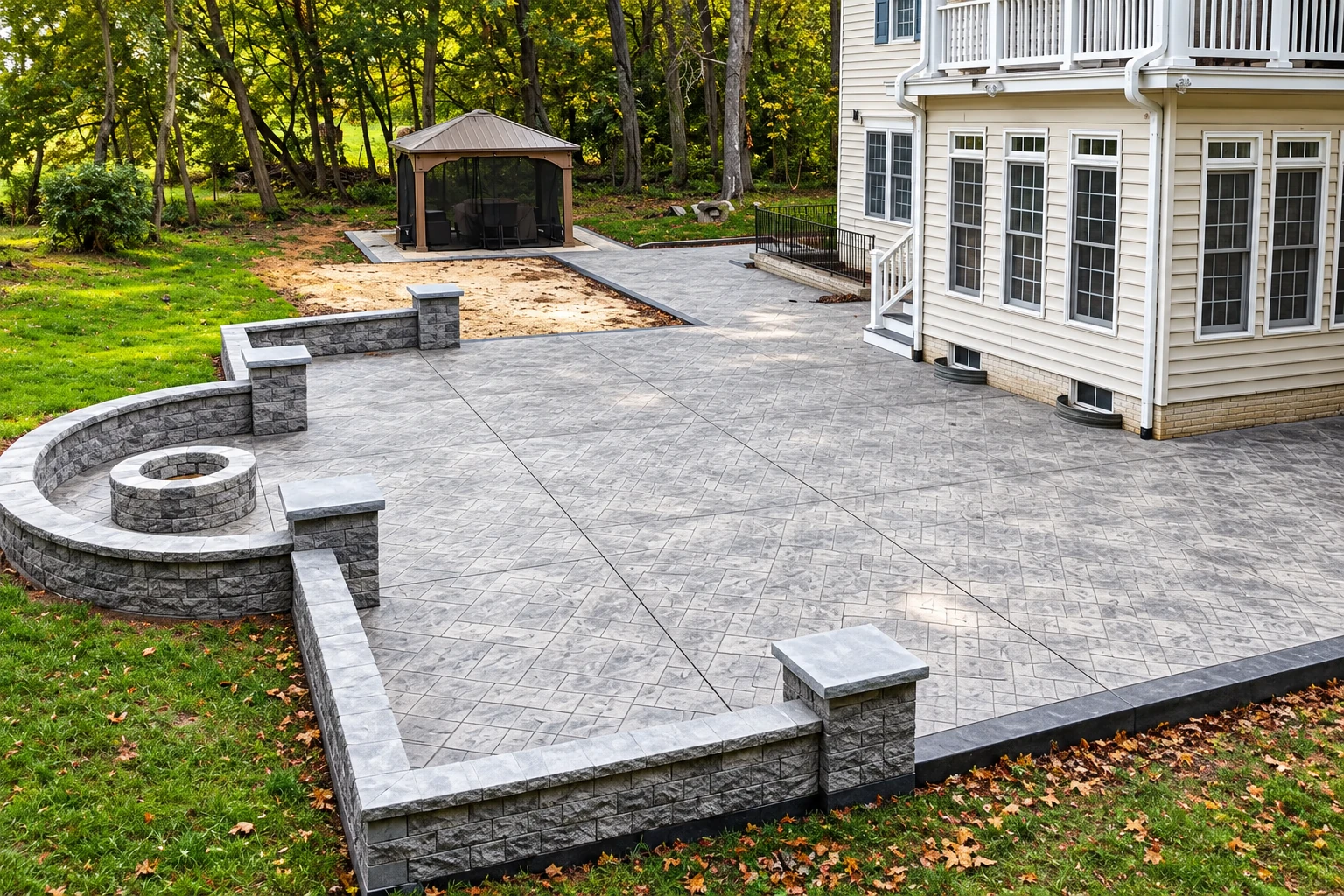
The price moves mostly with the wall's height and length, whether an old wall has to come out first, whether it curves or steps up the hill in terraces, and any stamped or stained finish or landscaping after. The schedule turns on whether a permit applies, how much digging the footing needs and the wait before soil can go back behind the wall, and your estimate spells out what's included for your slope. We're fully licensed and insured, and forming, pouring and finishing concrete is the work the state licensing board describes for a concrete contractor.
- Walls on slopes, along driveways and beside patios, poured in place or built from concrete block.
- Footings dug down to firm ground, with the drainage planned before the first form goes up.
- Tearing out an old leaning wall and hauling it off when the new one replaces it.
What happens after you call about a retaining wall?
I come out for every estimate myself, and our crew does the prep, forming and pour. Here's how a retaining wall job usually runs once you get in touch, start to finish.
Call us or send the form
Call (805) 873-8640 or send the form with your address and a few photos of the slope. We get back to you to set a time for me to come out and look.
I walk the slope with you
I look at where the water comes from, what's under the ground and how a crew gets in, and I ask a lot of questions about what's behind and around the wall. You get a written estimate that spells out what's included, so you know what you're paying for before anything gets dug.
Our crew digs, forms and pours
Once you say go, our crew handles the prep, the forms and the pour, and the drains go in before any soil goes back behind the wall. I check in on the work as it goes.
We walk the finished wall together
When the wall is done and the yard is put back, I walk it with you and show you where the drains are and how to keep them clear. That's the part most people forget about later, so I'd rather you see it while I'm standing there.
Concrete walls, slabs and steps built on solid ground
These photos show the kind of work the concrete trade does, from walls on a slope to flat slabs and steps. Tap any picture to see it larger, and bring your questions about your own yard to the estimate.
Concrete steps lead through landscaped garden beds to a covered house entrance, bordered by stone retaining walls.
A curved concrete driveway leads to a large white house, edged with light brick pavers and landscaped grass.
Decorative stamped concrete driveway with irregular stone patterns in front of a three-car garage.
Three broad concrete-topped brick steps lead to a red front door.
Concrete driveway in front of a stone garage with three dark doors and two dormer windows.
Brown stamped concrete patio with an irregular flagstone pattern beside a house.
Get a retaining wall estimate for your slope
Send your address, the wall's rough length and height and a few slope photos, and we'll reply within one business day to set a time for me to come out. The on-site estimate is free, with no obligation.
(805) 873-8640Questions Santa Paula homeowners ask about retaining walls
These are the questions I hear most when I'm standing on a slope with a homeowner. If yours isn't here, ask me at the estimate and I'll tell you what I'd want to know first.
How much does a concrete retaining wall cost near Santa Paula?
In Ventura County, a poured concrete retaining wall about 3 feet high usually runs about $48 to $53 per square foot of wall, labor and materials included. That's the area's going rate for a plain wall, not our price, and it leaves out the extras I mentioned up top, like removing an old wall or going taller, curved or decorative. For a figure on your slope, I'll come out and write an estimate that spells out what's included, with satisfaction guaranteed on every job.
What causes most retaining wall problems?
Poor drainage, by a wide margin. Research on earth retaining walls puts it at the top of the list, and water problems left alone can build until the wall fails outright. Where long, heavy rains are expected, guidance for block walls says a continuous drain along the back of the wall can be added to the drains through it, which is why the drainage plan deserves as much of your attention in a quote as the concrete does.
What are the signs of water building up behind a retaining wall?
Movement, the wall tipping forward, seams pulling apart and new cracks are the possible signs one drainage company points to for water pressure building up behind a wall. None of them proves it on its own, but if you see one, it's worth having someone look at how the wall drains before it gets worse. When I come out, I'll look for where the water is getting stuck.
How long does it take to build a concrete retaining wall?
It takes longer than the building alone, because soil can't go back behind a new wall the day it's finished. Guidance for block walls says to backfill only after the masonry has gained enough strength or the wall is braced, so plan on a gap between the wall going up and your yard being put back. The size of the wall, the footing dig and whether a permit applies set the rest, and I'll walk you through the order of things for your job at the estimate.
What should I ask before hiring a retaining wall contractor?
Ask what the footing will sit on, how water will get out from behind the wall and how the drains will stay clear over the years. Those three answers tell you more about how the wall will hold up than the finish ever will, and anyone who can't answer them plainly hasn't thought about the parts you'll never see.
How much room does a crew need to build a retaining wall in my yard?
Enough to keep heavy machines back from the top of the wall while the soil goes in behind it. Industry guidance for block walls says to keep heavy equipment back from the top by a distance equal to the wall's height during backfilling. At the estimate we'll work out where machines can go and how they get in, so your plants and paving aren't in the way.
Concrete retaining walls in Santa Paula and nearby cities
In Santa Paula, the city's Building & Safety Division takes building applications and plan submittals, and the city's building handouts include ones on retaining walls next to property line walls, walls with fences on them and block walls holding extra weight above them. I won't guess whether your wall needs a permit, so at the estimate we sort out whether one applies and who files it, and when we file, we handle the paperwork with the city or county office. It's also worth putting your address into the state's EQ Zapp map to see if it sits in a mapped zone for fault rupture, quake-triggered landslides or liquefaction, where soil briefly turns to quicksand and can't hold anything up. We're based in Santa Paula, where a lot of our wall calls come from sloped yards and driveways cut into a hill, and we do the same work in cities like Fillmore and Ventura.